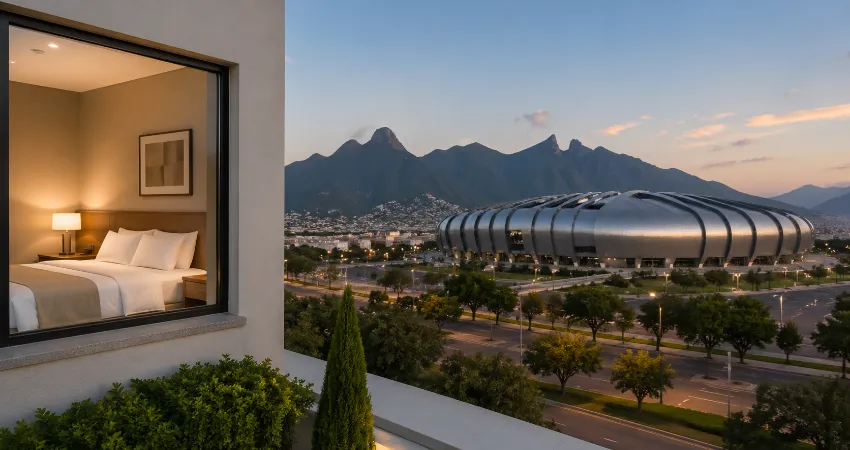

Estadio Azteca is the most iconic football venue in history — the only stadium ever to have hosted two FIFA World Cup Finals (1970 and 1986), and now set to become the first stadium to host matches in three separate World Cups when FIFA 2026 kicks off with the opening match on June 11, 2026.
This is where Pelé lifted the trophy, where Maradona scored the Hand of God goal, and where El Tri plays before a home crowd that generates noise levels described by European fans as the loudest they have ever experienced.
Mexico City itself is one of the most extraordinary cities on earth — a megacity of 22 million people with 150+ museums, ancient ruins hidden under its streets, colonial architecture, world-class food, and a cultural depth that rewards every day you invest in exploring it.
Estadio Azteca sits in the southern part of Mexico City, close to the charming Coyoacán neighborhood. Most tourist attractions are spread across the city and require Metro, Metrobus, or Uber to reach — but Mexico City’s transit system makes getting around both affordable and fast outside rush hours. This guide covers the ten best tourist attractions near Estadio Azteca for FIFA 2026 fans.
Top 10 Best Tourist Attractions Near Estadio Azteca
Coyoacán Neighborhood — Charming Colonial District Next to the Stadium
Coyoacán is the neighborhood that surrounds Estadio Azteca’s district — a beautifully preserved colonial area with cobblestone streets, vivid bougainvillea-lined walls, tree-shaded plazas, and one of the most atmospheric Sunday markets in Mexico City. Multiple FIFA 2026 travel guides including Cruise America and Viator list it as the essential starting point for any tourist visiting the stadium area.
The central square (Jardín Centenario) is lined with outdoor cafes, artisan stalls, and street performers. For any FIFA 2026 fan staying near the stadium, Coyoacán offers a half-day of genuine cultural immersion just minutes away.
Frida Kahlo Museum (Casa Azul) — One of the Most Visited Museums in Mexico
The Frida Kahlo Museum — known as Casa Azul (The Blue House) — is the childhood home and studio of Mexico’s most internationally celebrated artist, preserved exactly as she left it with her artwork, clothing, personal belongings, and Diego Rivera’s presence throughout.
Located in Coyoacán just 10 minutes from the stadium, it is one of the most visited and emotionally powerful museum experiences in all of Mexico. Book tickets well in advance — it sells out daily. For FIFA 2026 visitors experiencing Mexico’s cultural identity for the first time, Casa Azul is unmissable.
Xochimilco Canals — UNESCO World Heritage Ancient Waterways
Xochimilco is one of Mexico City’s most extraordinary and unique experiences — a UNESCO World Heritage Site where ancient Aztec-constructed canals and floating gardens (chinampas) are still navigated by colorful flat-bottomed boats called trajineras. Board a trajinera for a floating fiesta complete with mariachi musicians, food vendors paddling alongside, and the most festive waterway experience in Latin America.
The Wise.com FIFA 2026 Mexico City guide describes it as one of the essential experiences between matches — and it is unlike anything else available near Estadio Azteca.
Museo Diego Rivera Anahuacalli — Volcanic Stone Masterpiece Near the Stadium
Diego Rivera designed this extraordinary volcanic stone building himself as a personal museum and homage to pre-Columbian art — one of the most architecturally dramatic buildings in Mexico City. TripAdvisor rates it 4.6 stars from 599 reviews, and it sits just 1.5 miles from Estadio Azteca — making it the closest significant cultural attraction to the stadium after Coyoacán.
Rivera’s collection of over 50,000 pre-Columbian artifacts is housed within the building’s dark basalt chambers, creating an atmosphere that feels genuinely ancient despite being built in the 20th century. A hidden gem that FIFA visitors near the stadium should not overlook.
Teotihuacán Pyramids — The Greatest Archaeological Site in the Americas
No FIFA 2026 visitor to Mexico City should leave without seeing Teotihuacán — a pre-Columbian city built 2,000 years ago whose Pyramid of the Sun is one of the largest pyramids on earth. Climbing it at sunrise offers a view across an ancient metropolis that once housed 150,000 people.
The Wise.com FIFA 2026 guide calls it “a mystical, bucket-list experience.” Multiple organized day tours depart from central Mexico City, taking approximately one hour each way. Plan this visit on a non-match day — it deserves a full day, not a rushed afternoon.
National Museum of Anthropology — One of the World’s Greatest Museums
The National Museum of Anthropology in Chapultepec Park is rated 4.8 stars on TripAdvisor from 20,399 reviews — one of the highest-rated museums in the world. It houses the most important collection of pre-Columbian artifacts on earth, including the famous Aztec Sun Stone.
The Wise.com FIFA 2026 guide specifically lists it among the essential cultural experiences for World Cup visitors. At just $4 USD entry, it delivers one of the greatest museum experiences per dollar available anywhere in North America. Budget at least three hours — most visitors stay longer.
Zócalo & Historic Center — The Heart of Mexico City and the Americas
The Zócalo — Mexico City’s vast central square — is the second-largest public square in the world and the spiritual and political heart of the country. The Metropolitan Cathedral, the National Palace with Diego Rivera’s famous murals, and the Templo Mayor ruins (ancient Aztec ceremonial center discovered beneath the city streets) are all within steps of each other.
The Wise.com FIFA 2026 guide calls it an essential itinerary item. For any international fan visiting Mexico City, the Historic Center provides a three-hour walk through 700 years of history at almost no cost.
Chapultepec Castle — The Only Royal Castle in the Americas
Chapultepec Castle — the only royal castle in the Americas — sits atop a hill in the 686-hectare Chapultepec Park overlooking Paseo de la Reforma. Once home to Emperor Maximilian I of Mexico, it now houses the National Museum of History with breathtaking 360-degree views of the city below.
The Wise.com FIFA 2026 guide specifically highlights it as a must-visit for World Cup tourists. The surrounding Chapultepec Park is the largest urban park in Latin America — a perfect afternoon escape from the intensity of match-day Mexico City.
Roma & Condesa Neighborhoods — Mexico City’s Most Vibrant Fan Districts
Roma and Condesa are the neighborhoods that FIFA 2026 fans from around the world will instinctively gravitate toward — tree-lined avenues, art deco architecture, Michelin-recognized restaurants, craft cocktail bars, independent bookshops, and parks that fill with life on summer evenings.
The FWCUMC.com FIFA 2026 Mexico City guide recommends them as the best central base for most fans. For watching matches in bars, celebrating results, and experiencing Mexico City’s best food scene at every budget level, these two neighborhoods are the undisputed heart of the FIFA 2026 visitor experience in CDMX.
Ciudad Universitaria (UNAM) & Estadio Olímpico Universitario — A UNESCO Campus
UNAM — the National Autonomous University of Mexico — is a UNESCO World Heritage Site and one of the most architecturally extraordinary university campuses in the world. The buildings are covered in massive murals by Diego Rivera, David Alfaro Siqueiros, and Juan O’Gorman.
Within the campus, the Estadio Olímpico Universitario hosted the 1968 Summer Olympics and is decorated with a Rivera relief sculpture on its exterior. TripAdvisor lists Ciudad Universitaria among the top things to do near Estadio Azteca — and at just 15 minutes from the stadium, it is an easy half-day addition to any match-day itinerary.
FAQs About Best Tourist Attractions Near Estadio Azteca
1. How do I get from Estadio Azteca to Mexico City’s tourist attractions?
Take Metro Line 2 from Tasqueña (Tren Ligero from Azteca) toward the Historic Center and Chapultepec. Use Uber or Didi for Coyoacán, Xochimilco, and Roma-Condesa. On match days, Metro and Metrobus are the only practical options — road traffic near the stadium is severe. Always use digital transport apps rather than street taxis for safety.
2. How many FIFA 2026 matches does Estadio Azteca host?
Estadio Azteca hosts five FIFA World Cup 2026 matches — three group stage games, one Round of 32, and one Round of 16 — including the historic tournament opening match on June 11, 2026. This makes Mexico City the most historically significant venue in the tournament, hosting the first match of the first World Cup played in three countries simultaneously.
3. What is the closest tourist attraction to Estadio Azteca?
The Museo Diego Rivera Anahuacalli sits just 1.5 miles from the stadium and earns a 4.6 TripAdvisor rating. Coyoacán neighborhood is approximately 10 minutes away by Uber. Both are easy to combine on a non-match afternoon. The Frida Kahlo Museum (Casa Azul) is also within 10 minutes of the stadium in Coyoacán.
4. Is it worth staying near Estadio Azteca rather than in central Mexico City for FIFA 2026?
For most first-time visitors, staying in Roma, Condesa, or Centro Histórico offers a better overall experience — better restaurants, nightlife, and tourist access — with a 30 to 45-minute Metro and Tren Ligero commute to the stadium. Only fans attending multiple matches and prioritizing stadium convenience should stay in the southern Coyoacán district near the venue.
5. Is Mexico City safe for international tourists during FIFA 2026?
Roma, Condesa, Polanco, Chapultepec, Coyoacán, and the Historic Center are all considered safe for international tourists. Use Uber or Didi rather than street taxis. Avoid displaying expensive phones or cameras in crowded Metro stations. Security will be significantly reinforced across all tourist and stadium areas during the FIFA 2026 tournament window.
Conclusion
Mexico City is one of the most rewarding destinations of any FIFA World Cup 2026 host city — a place where ancient ruins sit beneath colonial streets, world-class museums charge $4 entry, Frida Kahlo’s Blue House stops you in your tracks, and Xochimilco’s trajinera boats offer a floating fiesta unlike anything else on earth.
From Coyoacán’s cobblestones next to the stadium to the pyramids of Teotihuacán an hour away, every day between matches in Mexico City can be as memorable as the football itself.
Use the Metro, book your Frida Kahlo tickets weeks ahead, and let one of the world’s great cities show you what it is capable of. Share this guide and explore our other FIFA 2026 Mexico City guides for hotels, restaurants, and transport.